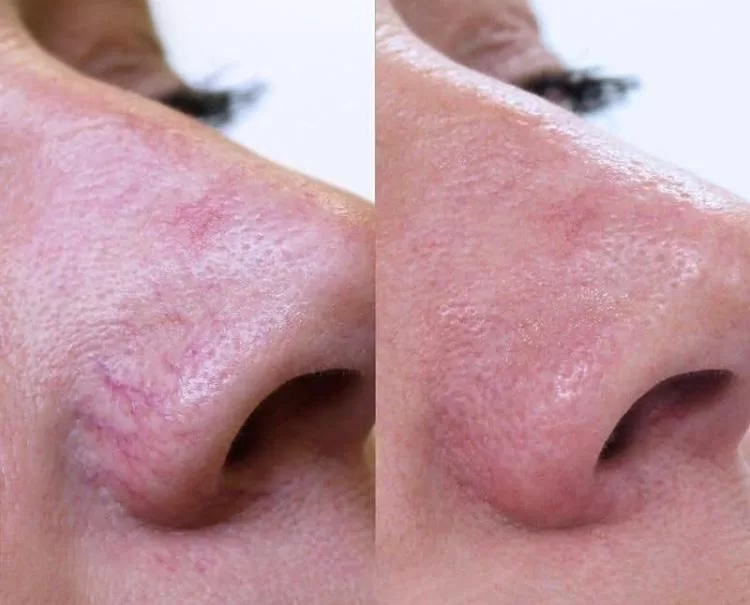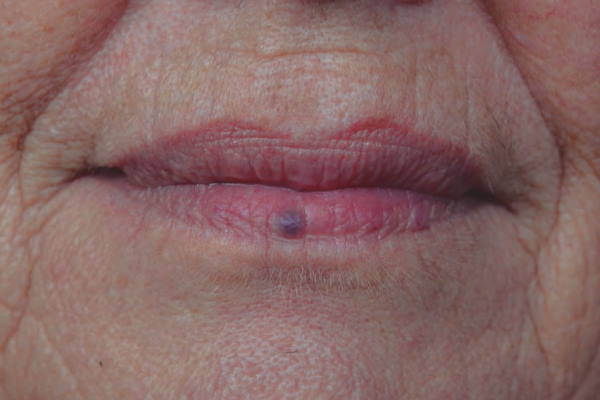
A blue or purple spot on the lip can be worrying, especially if it doesn’t fade over time. In many cases, this type of mark is called a venous lake – a small, harmless collection of dilated blood vessels under the skin.
While venous lakes are not dangerous, they can affect confidence and appearance, particularly when located on the lip or face.
At Skinoza Clinic in London, we specialise in safe, non-surgical venous lake removal using advanced laser and electrocautery techniques that deliver visible results with minimal discomfort or downtime.
In this article, we’ll explain what a venous lake is, how it differs from other lip lesions, and how modern treatments can restore clear, even-toned lips.
 What Is a Venous Lake?
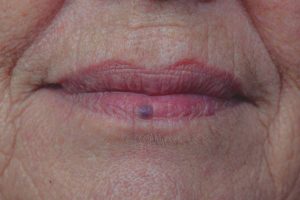
A venous lake is a small, dark blue or purple lesion that appears when tiny veins under the skin’s surface become enlarged. It often develops on sun-exposed areas of the skin — especially the lower lip, but also the ears, face, or neck.
The colour comes from slow-moving blood trapped within the dilated vein, giving the spot a soft, compressible texture. Venous lakes are benign (non-cancerous), but many people seek treatment for cosmetic reasons or to rule out more serious causes of pigmented lip lesions.
Common Signs and Symptoms
Venous lakes are usually easy to recognise, but they can be mistaken for other vascular or pigmented lesions. Common features include:
A soft, round or oval blue or purple bump
Usually between 2–8 mm in diameter
Painless and compressible to touch
Common on the lower lip, face, or ear
May darken when exposed to heat or sunlight
Because a venous lake is made up of blood vessels rather than pigment, pressing on it often causes the colour to fade temporarily.
What Causes Venous Lakes?
The exact cause isn’t always clear, but several factors can contribute to their development:
Sun damage – Chronic exposure to UV light weakens the walls of superficial veins.
Ageing – As we age, skin and blood vessels lose elasticity, making venous dilation more likely.
Genetic predisposition – Some people are more prone to vascular changes.
Minor trauma – Biting or injuring the lip can occasionally trigger local vessel dilation.
They are more common in adults over 40, but can occur in younger people too, especially after years of sun exposure without protection.
Is a Venous Lake Dangerous?
In most cases, a venous lake is entirely harmless. It is not cancerous, and does not spread or turn malignant. However, it’s still important to have any new or changing spot checked by a qualified professional — particularly if it:
Grows rapidly
Bleeds
Changes colour or shape
Appears with other skin lesions
At Skinoza Clinic London, we begin with a detailed consultation and visual examination to confirm the diagnosis and ensure that the lesion is indeed a venous lake and not another vascular or pigmented condition such as a haemangioma, melanoma, or mucocele.
Venous Lake vs Other Lip Lesions
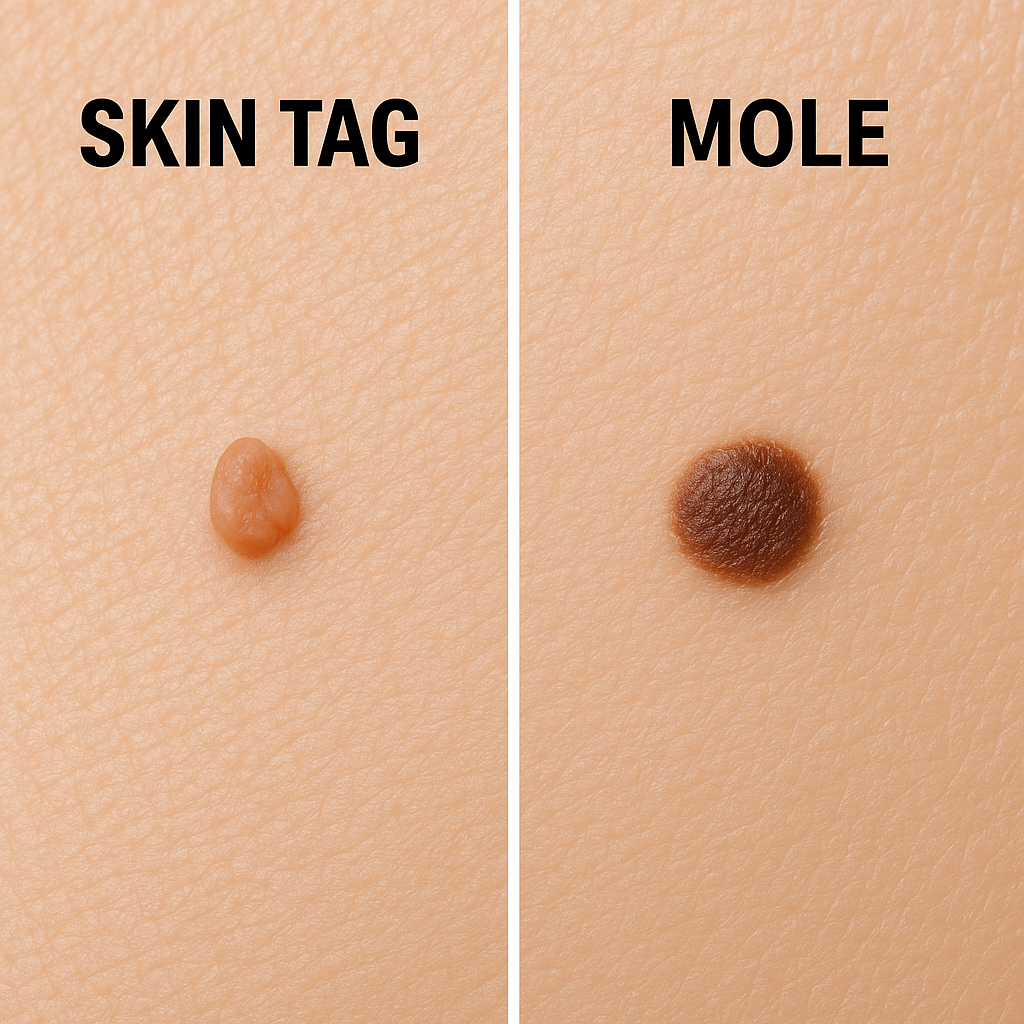
Many patients initially think a venous lake is a bruise, a mole, or even a blood blister. Understanding the difference helps ensure the correct treatment.
| Condition | Colour & Texture | Typical Cause | Treatment |
|---|---|---|---|
| Venous Lake | Blue or purple, soft, compressible | Dilated superficial vein | Laser or electrocautery |
| Pigmented Mole | Brown or black, flat | Melanocyte accumulation | Surgical or laser removal |
| Blood Blister | Red or purple, tender | Minor trauma | Heals naturally |
| Mucocele | Clear or bluish cyst, inside lip | Blocked salivary gland | Surgical excision |
If you’re unsure what kind of lesion you have, it’s best to book a professional assessment at a trusted London skin clinic.
How Is a Venous Lake Diagnosed?
Diagnosis is usually clinical, meaning it’s based on appearance and examination. Your practitioner may:
Examine the lesion under magnification and bright light.
Gently compress it to see if the colour fades – a key sign of a vascular lesion.
Use dermoscopy, a non-invasive imaging technique that reveals fine vascular structures.
If there’s any uncertainty, further tests (such as ultrasound or referral to a dermatologist) can confirm the diagnosis before treatment.
Venous Lake Treatment in London
At Skinoza Clinic, we provide safe, effective removal of venous lakes using advanced non-surgical technologies. Treatment is quick, virtually painless, and designed to restore smooth, natural-looking lips with minimal healing time.
1. Laser Treatment (Vascular Laser or Nd:YAG Laser)
Laser treatment is one of the most effective and precise options for venous lake removal. The laser emits a controlled beam of light that specifically targets the haemoglobin in the blood vessel. This causes the vein to collapse and seal, while the surrounding skin remains unharmed.
Benefits:
Non-invasive and virtually painless
No cutting or bleeding
High precision – ideal for delicate areas like the lips
Minimal downtime
Excellent cosmetic results
After treatment, the lesion may darken temporarily before fading over several days as the treated vein is reabsorbed by the body.
2. Electrocautery (Thermo-coagulation)
Electrocautery uses a fine, heated probe to coagulate the vessel and stop blood flow through the venous lake. The area dries and forms a small scab, which heals naturally within a week.
Benefits:
Highly effective for small lesions
Quick procedure (typically 5–10 minutes)
Immediate cosmetic improvement
Minimal scarring
This method is ideal for patients who prefer a straightforward, single-session solution.
3. Cryotherapy (Freezing Treatment)
Cryotherapy involves applying a controlled burst of liquid nitrogen to freeze the affected vessel. This option is less common for lip lesions but can be used in selected cases. The lesion may blister and peel as the damaged tissue heals.
What to Expect During Treatment
Consultation and assessment – Your practitioner confirms the diagnosis and discusses suitable treatment options.
Preparation – The area is cleaned and numbed with topical anaesthetic if required.
Treatment – Laser or electrocautery is performed, lasting just a few minutes.
Aftercare – You’ll receive full instructions for caring for your lips post-treatment.
The procedure is well tolerated and requires no stitches or injections.
Aftercare and Healing
Following venous lake removal, the treated area may appear slightly red or darker for a few days.
Here’s how to promote smooth healing:
Keep the area clean and dry for 24 hours.
Avoid hot drinks, spicy food, and excessive lip movement for 1–2 days.
Do not pick at any scabs — they will fall off naturally.
Apply SPF lip balm to protect the skin from sun exposure.
Avoid makeup or lipstick until fully healed.
Most patients see full recovery within 7–10 days, with the area returning to normal colour and texture soon after.
Results and Long-Term Outcome
Results are typically permanent. Once the affected vein is sealed or removed, the blue discolouration disappears and does not return.
In rare cases, a second session may be recommended if the lesion is large or particularly deep.
Before-and-after photos often show a significant cosmetic improvement, with clearer, smoother lips and restored confidence.
Is the Treatment Safe?
Yes — when performed by a qualified practitioner, venous lake removal is very safe.
At Skinoza Clinic, our clinicians are trained in advanced laser and vascular skin treatments, ensuring precision and safety at every stage.
We use medical-grade equipment and maintain strict hygiene protocols in our CQC-registered London clinic, giving patients complete peace of mind.
Who Is Suitable for Treatment?
Most adults with a confirmed venous lake are suitable for treatment.
However, your practitioner will assess factors such as:
Skin type and tone
Size and depth of the lesion
Medical history (including anticoagulant use or bleeding disorders)
Recent sun exposure or lip procedures
If you are prone to cold sores, you may be advised to take antiviral medication before treatment to prevent recurrence.
Frequently Asked Questions
Does venous lake removal hurt?
Most patients describe the sensation as a mild tingling or warmth. A numbing cream can be used for comfort.
How long does the treatment take?
Usually 10–20 minutes, including preparation.
Will it leave a scar?
When performed correctly, scarring is minimal or nonexistent. The lips heal beautifully with no visible trace of the lesion.
Can a venous lake come back?
Recurrence is rare. If a new lesion forms, it is usually in a different spot and can be treated in the same way.
Is it suitable for all skin types?
Yes. Both laser and electrocautery can be safely adjusted for different skin tones.
Why Choose Skinoza Clinic for Venous Lake Treatment in London
Qualified practitioners: Our clinicians have extensive experience in laser and vascular treatments.
Advanced equipment: We use medical-grade Nd:YAG lasers and precision electrolysis devices.
Safe and sterile environment: Skinoza Clinic is fully CQC-registered and follows strict medical protocols.
Tailored care: Every client receives an individual assessment and treatment plan.
Minimal downtime: Most people return to normal activities immediately after treatment.
Our goal is to restore your confidence by removing unwanted skin or vascular lesions quickly, safely, and effectively.
Cost of Venous Lake Lip Treatment in London
The cost of venous lake removal depends on the size and number of lesions treated.
At Skinoza Clinic London, consultations are complimentary, and prices are confirmed during your visit.
Most clients require only one session, making it a highly cost-effective solution.
Book Your Venous Lake Consultation at Skinoza Clinic London
If you’ve noticed a persistent blue or purple spot on your lip, it could be a venous lake. While harmless, it can be easily and safely treated with advanced laser or electrocautery procedures.
Book Your Consultation
If you’re considering mole removal in London, we’ll be happy to assess your skin and explain the best options for you.
 Call us: 020 3026 6094
 Visit us:
1. Skinoza Clinic – Blackhorse, 6, Frank Searle Passage, London E17 6ET
2. Skinoza Clinic – Greenwich, Unit 1, 61 Banning St, London SE10 0YH
3. Skinoza Clinic – Orpington, 1 Chislehurst Rd, Orpington BR6 0DF
 Open: Monday – Saturday, until 8 pm
 Book online: www.skinozaclinic.co.uk